
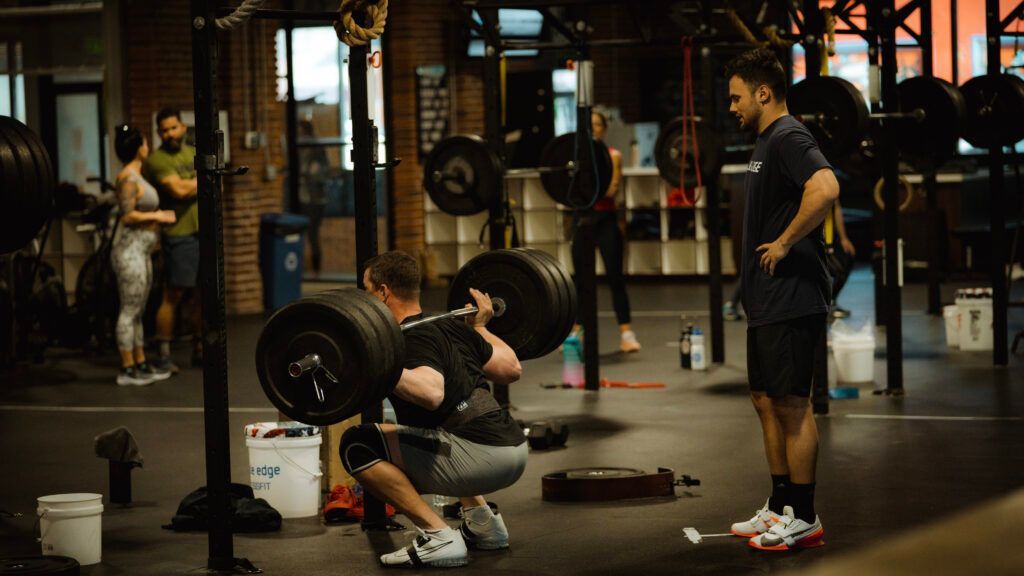
Why Squatting Below Parallel is Best

Derek Wellock • February 19, 2025
Person deadlifting a barbell in a gym while others watch nearby.

Based on the most current strength and conditioning research available as of February 19, 2025, the debate surrounding squat depth—specifically squatting below parallel (often referred to as “deep squats”) versus squatting only to parallel—has evolved significantly. Research increasingly supports the idea that squatting below parallel, when performed with proper technique, offers notable benefits for knee health and overall physical performance while dispelling many outdated concerns about risks. Below, I’ll break down the benefits and risks of both approaches, focusing on knee health, and highlight the latest findings.

Benefits of Squatting Below Parallel

  1. Enhanced Knee Stability and Joint Health

  • Deep squats involve a greater range of motion (typically beyond 90 degrees of knee flexion), which engages more musculature around the knee, including the quadriceps, hamstrings, and glutes. Studies indicate that this increased muscle activation improves knee stability by strengthening the surrounding ligaments and tendons. The controlled loading in deep squats stimulates adaptation in these connective tissues, making them more resilient to stress and potentially reducing injury risk over time.
  • Research shows that compressive forces on the knee increase with depth, but healthy knees can adapt to these forces without damage. Notably, the “wrapping effect”—where the hamstrings and calves make contact at the bottom of a deep squat—helps distribute forces more evenly across the joint, reducing strain on any single structure like the meniscus or patellofemoral joint.

  1. Reduced Shear Stress on Ligaments

  • Contrary to earlier assumptions, deep squats do not increase shear stress on the anterior cruciate ligament (ACL) or posterior cruciate ligament (PCL). In fact, studies demonstrate that shear forces decrease as knee flexion exceeds 90 degrees because the hamstrings co-contract with the quadriceps, stabilizing the tibia and minimizing tibial translation. This suggests that deep squats may protect the knee ligaments rather than harm them.

  1. Improved Physical Performance

  • Deep squats have been shown to produce superior gains in strength, power, and athletic performance compared to partial or parallel squats. Research highlights greater improvements in vertical jump height, sprint speed, and maximum strength (e.g., 1RM) when training includes squats below parallel. This is attributed to the fuller range of motion, which maximizes muscle fiber recruitment and time under tension, particularly in the glutes and hamstrings.

  1. Potential Protective Effect Against Degeneration

  • Long-term studies of weightlifters and powerlifters—who regularly squat below parallel with heavy loads (up to 6 times body weight)—show no increased incidence of knee cartilage wear or osteoarthritis compared to non-lifters. This challenges the notion that deep squats are inherently degenerative and suggests that joints adapt to progressive loading when technique is sound.

Risks of Squatting Below Parallel

  1. Technique Dependency

  • The benefits of deep squats hinge on proper form. Poor mechanics—such as excessive forward lean, knee valgus (knees caving in), or loss of spinal neutrality—can increase stress on the knees, hips, or lower back. For individuals with limited mobility (e.g., stiff ankles or hips), achieving depth without compensations can be challenging, potentially elevating injury risk if forced.

  1. Pre-existing Conditions

  • For those with existing knee issues (e.g., meniscal tears, patellar tendinopathy, or patellofemoral pain), deep squats might exacerbate symptoms due to higher compressive loads. However, this is not a universal risk; it’s individual-specific and often manageable with modified depth or rehab-focused approaches.

  1. Hip and Back Considerations

  • Excessive depth (beyond 130 degrees of knee flexion) can increase hip joint forces, potentially leading to impingement or discomfort in those with hip pathology. Additionally, if mobility limitations cause “buttwink” (posterior pelvic tilt at the bottom), the lumbar spine may flex under load, posing a risk to spinal health rather than the knees.

Benefits of Squatting Only to Parallel

  1. Lower Compressive Forces

  • Squatting to parallel (around 90–100 degrees of knee flexion) involves less knee flexion, resulting in lower peak compressive forces on the knee compared to deeper squats. This might feel more comfortable for beginners or those with minor knee discomfort, though it doesn’t inherently “protect” the knee more than deep squats.

  1. Sport-Specific Relevance

  • For athletes whose sports don’t require deep knee flexion (e.g., speed skaters or certain field sport positions), parallel squats may suffice to build strength at relevant joint angles without the need for greater depth. This specificity can optimize training efficiency.

Risks of Squatting Only to Parallel

  1. Incomplete Muscle Development

  • Parallel squats engage fewer muscle fibers, particularly in the posterior chain (glutes and hamstrings), compared to deep squats. This can lead to imbalanced strength around the knee, potentially increasing vulnerability to injury during dynamic movements that demand full-range control (e.g., landing from a jump).

  1. Higher Shear Forces

  • Research indicates that shear forces on the knee ligaments peak around 90 degrees of flexion and decrease beyond that. Stopping at parallel may thus expose the ACL and PCL to greater stress than descending further, contradicting the old belief that partial squats are “safer” for ligaments.

  1. Limited Functional Carryover

  • Everyday activities (e.g., sitting, standing) and many sports require strength beyond parallel. Limiting squat depth may leave individuals less prepared for these demands, potentially increasing injury risk outside the gym due to weaker deep-range strength and stability.

  1. Potential for Overloading

  • Because parallel squats allow heavier loads (due to the shorter range of motion), lifters might inadvertently overload the knee with supra-maximal weights. Studies suggest this can concentrate forces more locally on knee structures, increasing long-term degenerative risk compared to lighter, full-depth squats.

Comparative Analysis and Current Consensus

  • Knee Health : The latest research largely debunks the myth that deep squats harm healthy knees. When executed correctly, they enhance joint stability, strengthen supportive tissues, and distribute forces more favorably than parallel squats. Parallel squats, while not inherently “bad,” may leave the knee less robust due to reduced muscle activation and higher shear forces at 90 degrees.
  • Performance : Deep squats consistently outperform parallel squats for strength, power, and hypertrophy, making them a preferred choice for athletes and fitness enthusiasts aiming to maximize gains.
  • Risk Mitigation : Both depths carry risks if the technique falters, but deep squats demand greater mobility and control, which can be a barrier for some. Parallel squats might feel “safer” for novices but don’t inherently reduce overall stress on the body—shifting it to the hips and back instead.

Practical Takeaways

  • For Healthy Individuals : Squatting below parallel is not only safe but advantageous for knee health and performance, provided mobility and technique are adequate. Start with bodyweight deep squats, progress gradually, and prioritize form (e.g., knees tracking over toes, neutral spine).
  • For Rehabilitation or Limitations : If knee pain or mobility issues exist, parallel squats can serve as a starting point, with depth increased as strength and range improve. Consult a professional to tailor the approach.
  • Training Goals : Match depth to purpose—deep squats for maximal strength and resilience, parallel for sport-specific joint angles or temporary load management.

In summary, current evidence tilts heavily in favor of squatting below parallel for most people, portraying it as a “friend” to the knee rather than a foe. Parallel squats aren’t obsolete, but their perceived safety edge is overstated, and they may fall short in delivering the comprehensive benefits of deeper squatting. Always individualize based on capability and context, but don’t shy away from depth out of unfounded fear.

Recent Posts

By Derek Wellock April 5, 2025
Happy Saturday, everyone! I’m slowly getting my studio (aka my office) set up to look halfway decent, so when I share some facts with you, it’s not a total eyesore—well, aside from having to look at my mug and listen to my voice. Today, I’m diving into the supplements I take daily. These are staples […] The post My Daily Supplements Routine: What I Take, Why, and How I Keep It Intentional appeared first on Double Edge Fitness.
By Derek Wellock March 30, 2025
Hey there, fitness fam! Recently, one of our community members hit me with a great question that I think a lot of you might relate to: “I’ve been working out at 7 a.m., but since starting a calorie deficit to lose weight, I feel sluggish and don’t have the same ‘go’ I used to. Any […] The post How to Stay Energized for Workouts on a Calorie Deficit appeared first on Double Edge Fitness.
By Derek Wellock March 23, 2025
Meet Cassie Wellock: The Preventative Health Pro Cassie’s no stranger to medicine. With a background in internal and family medicine in Reno, she’s spent over a decade helping patients aged 12 and up. Now, she’s teamed up with her husband to launch Vertical Primary Care within Double Edge Fitness. Their mission is simple but bold: […] The post Unlocking Health with Blood Work – A Deep Dive with Double Edge Fitness and Guest Cassie Wellock PA-C appeared first on Double Edge Fitness.
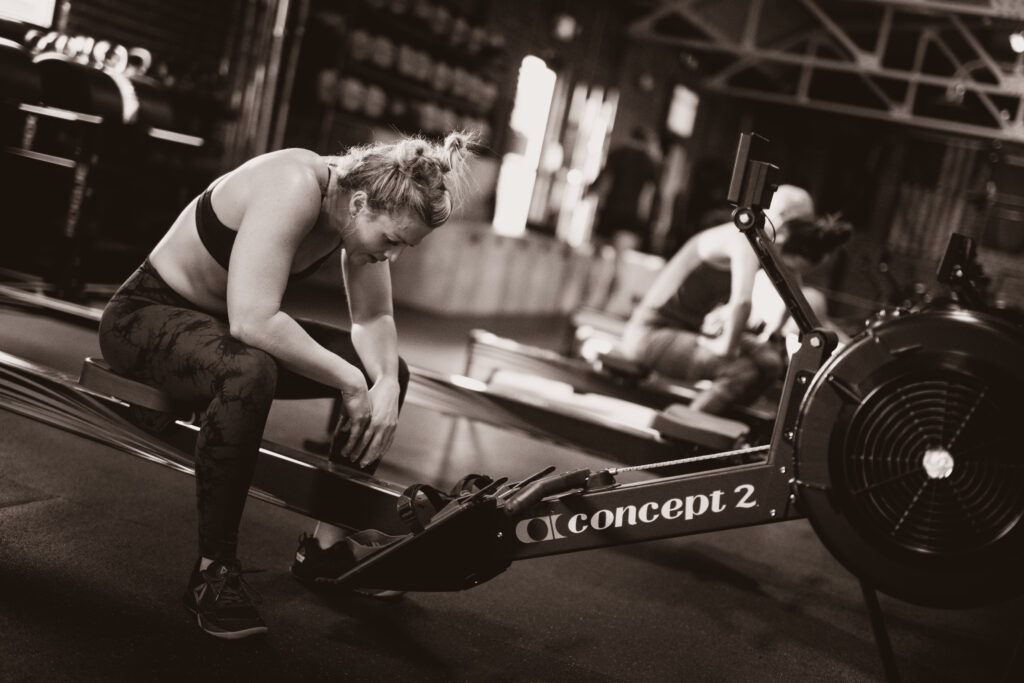
Two athletes resting beside rowing machines in a gym in Reno, NV, one wiping sweat
By Derek Wellock March 19, 2025
If you’ve ever hopped on a Concept2 rowing machine, you know it’s no joke. That sleek, unassuming piece of equipment can humble even the fittest among us, especially when it comes to the infamous 2,000-meter row. Whether you’re chasing a personal best or just curious about how you stack up, the 2K row is a […] The post Unlocking the Power of the 2K Row: Times, Fitness, and Why It Matters appeared first on Double Edge Fitness.

Logo for Vertical Primary Care with a thin line and cursive tagline on a white background
By Derek Wellock January 19, 2025
I’m thrilled to introduce Vertical Primary Care, a Direct Primary Care (DPC) practice built around the belief that healthcare should be accessible, transparent, and focused on you. At Vertical Primary Care, I take a comprehensive approach to your well-being. A DPC model allows me to offer a wide range of services tailored to meet your […] The post Welcome to Vertical Primary Care: Redefining Your Healthcare Experience appeared first on Double Edge Fitness.
By Derek Wellock January 12, 2025
When it comes to transforming your body—whether you’re aiming to lose fat, gain muscle, or both—one nutrient reigns supreme: protein. Often dubbed the “building block of life,” protein plays a central role in almost every process in the body, from muscle repair to metabolic function. Yet, its importance is sometimes misunderstood, particularly in the context […] The post Why Optimal Protein Intake is Key for Fat Loss and Muscle Gain appeared first on Double Edge Fitness.
By Derek Wellock January 5, 2025
“Excellence is not a singular act, but a habit. The small, consistent steps we take every day lead to extraordinary transformation.” At Double Edge Fitness, we believe that striving for excellence is more than just lifting heavier or running faster it’s about becoming healthier, stronger, and more capable in all aspects of life. As we […] The post Double Edge Fitness: Our 1000lbs 2025 Goal for Excellence in Metabolic Health appeared first on Double Edge Fitness.
By Derek Wellock December 21, 2024
The start of a new year brings fresh motivation, big dreams, and the all-too-common resolutions to “get fit” or “start eating healthy.” However, statistics reveal a harsh truth: 80% of New Year’s resolutions fail by February, and nearly 50% of gym memberships go unused after the first month. At Double Edge Fitness, we know how […] The post New Year’s Health and Fitness Resolutions: Make This the Year You Succeed When 80% of People Fail. appeared first on Double Edge Fitness.

Two boxes of white pads with blue labels displayed side by side on a white background
By Derek Wellock December 2, 2024
In today’s world, maintaining optimal health isn’t always as straightforward as eating a balanced diet. Even the most health-conscious among us can fall short in meeting all of our nutritional needs due to factors like food quality, soil depletion, and busy lifestyles. That’s where a high-quality multivitamin can make a world of difference. A well-formulated […] The post The Importance of a Good Multivitamin for Your Health appeared first on Double Edge Fitness.