
How to Stay Energized for Workouts on a Calorie Deficit

Derek Wellock • March 30, 2025

Hey there, fitness fam! Recently, one of our community members hit me with a great question that I think a lot of you might relate to: “I’ve been working out at 7 a.m., but since starting a calorie deficit to lose weight, I feel sluggish and don’t have the same ‘go’ I used to. Any ideas on how to keep crushing my workouts while sticking to this deficit?”

It’s a fantastic question because it gets to the heart of balancing performance and weight loss—a tricky spot for anyone who loves training hard. Let’s break it down and explore some strategies to keep you feeling strong, even when the calories are dialed back.


The Calorie Deficit Basics: Why You’re Feeling Drained

First things first: a calorie deficit is the only way to lose weight. It’s simple thermodynamics—burn more than you eat, and your body taps into stored energy (like fat) to make up the difference. But here’s the catch: when you’re training hard, especially at high intensity, slashing calories can leave you running on fumes.

Why? Because your body’s fuel preferences shift depending on the workout. High-intensity, anaerobic efforts—like heavy lifting or sprints—rely heavily on glycogen (stored carbs) for quick energy. Fat, while a great fuel source, takes longer to convert into usable energy and shines in lower-intensity, aerobic states. If you’re cutting carbs to hit that deficit and then pushing an anaerobic workout, you might be short-changing your performance.

So, how do we fix this? It starts with how you’re building that calorie deficit.


Protein Stays, Carbs and Fat Play

Here’s a golden rule: protein is non-negotiable . Whether you’re in a deficit, maintenance, or surplus, your protein intake should stay consistent to preserve muscle mass and support recovery. So, when we talk about cutting calories, we’re playing with the other two macros: carbohydrates and fat.

Society loves to scream, “Cut carbs to lose weight!” And sure, reducing calories from any source will drop the scale. But for those of us who train hard—especially early in the morning—slashing carbs might not be the smartest move. Instead, I’d argue for pulling calories more from fat while keeping carbs higher to fuel your workouts.

Why? Carbs are your body’s go-to for intense activity and recovery. They replenish muscle glycogen, kickstart protein synthesis, and keep you ready for the next session. Fat, on the other hand, is a denser energy source (9 calories per gram vs. carbs’ 4), so trimming it can get you to that deficit faster without sacrificing workout juice.

For sedentary folks or low-activity weight loss, I’d flip it—cut carbs, keep fat steady—since their bodies can lean on fat as fuel in an aerobic state. But for lifters and high-intensity lovers? Protect those carbs.


Practical Tips to Tweak Your Deficit

So, how do you make this work? Here are some actionable steps:

1. Weigh and Measure Your Food

If you’re not losing weight, you’re not in a deficit—period. Most people underestimate how much they eat, so let’s get real with the numbers. Track your food for a few days (it doesn’t have to be perfect) to see your baseline protein, carbs, and fats. For example, if you’re at 200 grams of carbs daily, that’s a solid starting point for most active people. Adjust from there based on your size, muscle mass, and training intensity.

2. Cut Fat, Not Carbs

Look at your protein sources—swap fatty cuts of meat for leaner ones, ditch the olive oil or butter, and opt for low-fat or non-fat dairy (think milk or yogurt). Fat’s calorie density means small cuts here can add up fast, letting you keep carbs higher for energy and recovery.

3. Time Your Carbs Around Training

Carbs are for activity, not lounging. On training days, load most of your carbs pre- and post-workout. Post-workout, they’ll replenish glycogen and kick recovery into gear. Pre-workout, they’ll give you the boost to power through. On sedentary days (like a chill weekend), dial them back—unused carbs can turn into stored fat if you’re not burning them.

4. Experiment with Pre-Workout Fuel

Feeling drained at 7 a.m.? Try a small carb hit before training. Personally, I love a smoothie with blueberries, milk, protein powder, and creatine about two hours before I lift—it’s 20-30 grams of carbs that sit well and keep me going. If that’s not an option (say, you’re rushing to a 5 a.m. session), a fast-digesting carb supplement like First Form’s Ignition works wonders. Start with a quarter scoop (15-20 grams of carbs), pair it with protein, and tweak up until you feel that pre-deficit spark again.

For a natural vibe, honey’s my go-to whole-food carb source—one or two tablespoons digest fast and fuel you up without the heaviness.

5. Give Your Body Time to Adapt

If you just started this deficit, give it a couple of weeks. Your body’s used to running on plentiful fuel, so it needs time to adjust its energy systems. Be patient, track how you feel, and tweak as you go.


Finding Your Sweet Spot

Here’s the deal: there’s no one-size-fits-all answer. A 200-gram carb day might be perfect for one person but too low for another—it depends on your size, muscle mass, and training volume. An in-body scan can dial in your starting numbers, but even then, it’s a starting point. Run it for 2-6 weeks, see how you perform and recover, and adjust.

For the member who asked this (you know who you are!), I’d suggest aiming for 200 grams of carbs daily, with a big chunk post-workout to kickstart recovery early. Play with pre-workout options—Ignition, honey, or fruit—and see what clicks.


Final Thoughts

Training hard on a calorie deficit is totally doable, but it takes intention. Keep protein steady, cut fat over carbs, time your fuel around workouts, and listen to your body. If you’re still bonking, it might not just be calories—fitness level plays a role too (but that’s a convo for another day).

Got more questions? Drop them below, shoot me a text, or email me. I’ll dig into the science, find answers, or admit when I don’t know—and then figure it out for you. We’re in this health and fitness journey together!

Until next time, keep lifting, keep learning, and love you guys!


Recent Posts

By Derek Wellock April 5, 2025
Happy Saturday, everyone! I’m slowly getting my studio (aka my office) set up to look halfway decent, so when I share some facts with you, it’s not a total eyesore—well, aside from having to look at my mug and listen to my voice. Today, I’m diving into the supplements I take daily. These are staples […] The post My Daily Supplements Routine: What I Take, Why, and How I Keep It Intentional appeared first on Double Edge Fitness.
By Derek Wellock March 23, 2025
Meet Cassie Wellock: The Preventative Health Pro Cassie’s no stranger to medicine. With a background in internal and family medicine in Reno, she’s spent over a decade helping patients aged 12 and up. Now, she’s teamed up with her husband to launch Vertical Primary Care within Double Edge Fitness. Their mission is simple but bold: […] The post Unlocking Health with Blood Work – A Deep Dive with Double Edge Fitness and Guest Cassie Wellock PA-C appeared first on Double Edge Fitness.
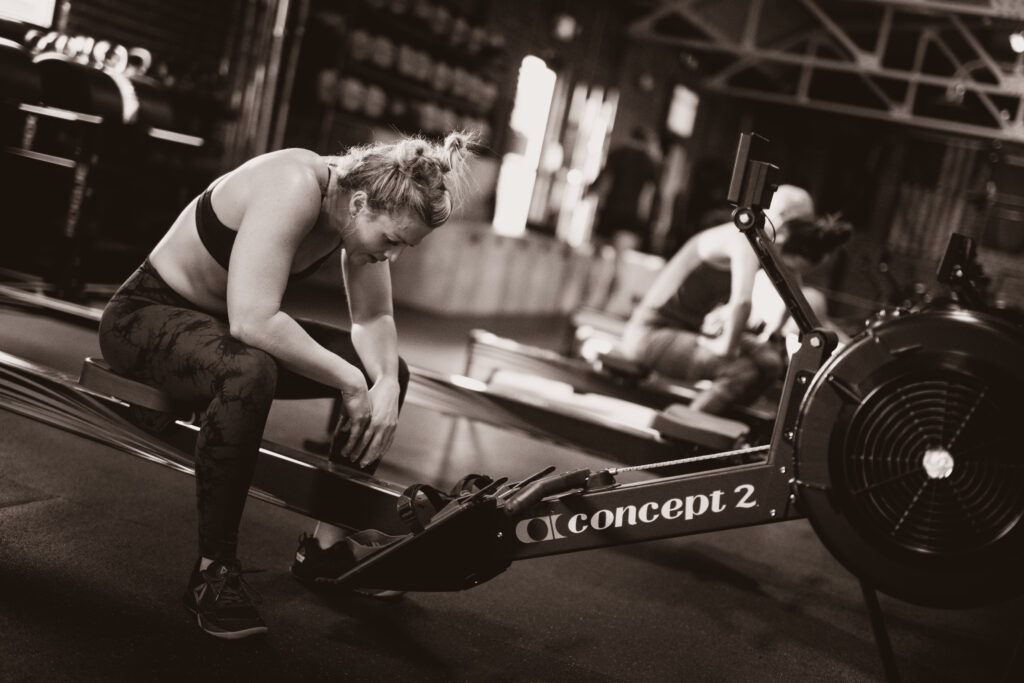
Two athletes resting beside rowing machines in a gym in Reno, NV, one wiping sweat
By Derek Wellock March 19, 2025
If you’ve ever hopped on a Concept2 rowing machine, you know it’s no joke. That sleek, unassuming piece of equipment can humble even the fittest among us, especially when it comes to the infamous 2,000-meter row. Whether you’re chasing a personal best or just curious about how you stack up, the 2K row is a […] The post Unlocking the Power of the 2K Row: Times, Fitness, and Why It Matters appeared first on Double Edge Fitness.
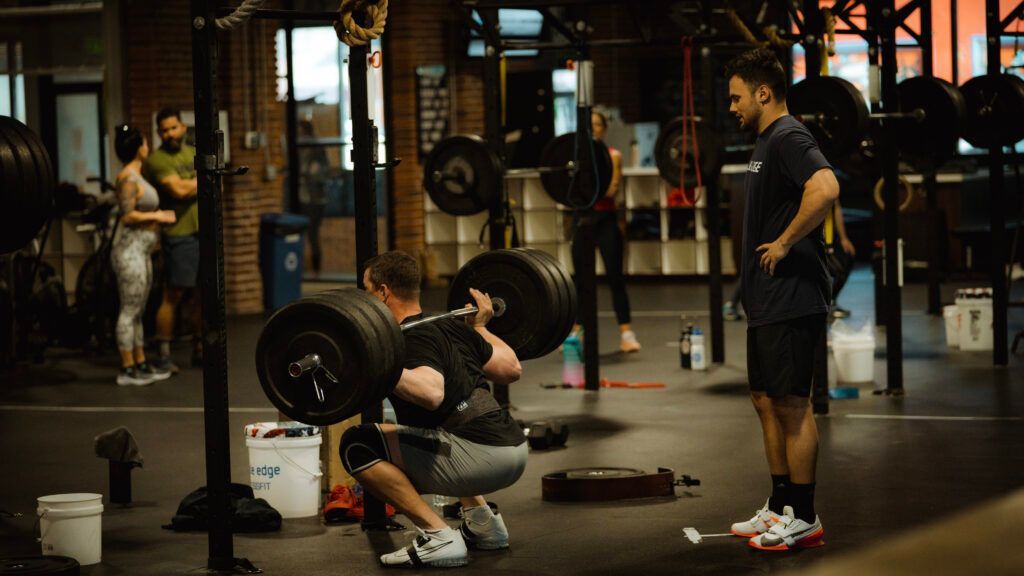
Person deadlifting a barbell in a gym in Reno, NV while others watch nearby.
By Derek Wellock February 19, 2025
Based on the most current strength and conditioning research available as of February 19, 2025, the debate surrounding squat depth—specifically squatting below parallel (often referred to as “deep squats”) versus squatting only to parallel—has evolved significantly. Research increasingly supports the idea that squatting below parallel, when performed with proper technique, offers notable benefits for knee […] The post Why Squatting Below Parallel is Best appeared first on Double Edge Fitness.
Logo for Vertical Primary Care with a thin line and cursive tagline on a white background
By Derek Wellock January 19, 2025
I’m thrilled to introduce Vertical Primary Care, a Direct Primary Care (DPC) practice built around the belief that healthcare should be accessible, transparent, and focused on you. At Vertical Primary Care, I take a comprehensive approach to your well-being. A DPC model allows me to offer a wide range of services tailored to meet your […] The post Welcome to Vertical Primary Care: Redefining Your Healthcare Experience appeared first on Double Edge Fitness.
By Derek Wellock January 12, 2025
When it comes to transforming your body—whether you’re aiming to lose fat, gain muscle, or both—one nutrient reigns supreme: protein. Often dubbed the “building block of life,” protein plays a central role in almost every process in the body, from muscle repair to metabolic function. Yet, its importance is sometimes misunderstood, particularly in the context […] The post Why Optimal Protein Intake is Key for Fat Loss and Muscle Gain appeared first on Double Edge Fitness.
By Derek Wellock January 5, 2025
“Excellence is not a singular act, but a habit. The small, consistent steps we take every day lead to extraordinary transformation.” At Double Edge Fitness, we believe that striving for excellence is more than just lifting heavier or running faster it’s about becoming healthier, stronger, and more capable in all aspects of life. As we […] The post Double Edge Fitness: Our 1000lbs 2025 Goal for Excellence in Metabolic Health appeared first on Double Edge Fitness.
By Derek Wellock December 21, 2024
The start of a new year brings fresh motivation, big dreams, and the all-too-common resolutions to “get fit” or “start eating healthy.” However, statistics reveal a harsh truth: 80% of New Year’s resolutions fail by February, and nearly 50% of gym memberships go unused after the first month. At Double Edge Fitness, we know how […] The post New Year’s Health and Fitness Resolutions: Make This the Year You Succeed When 80% of People Fail. appeared first on Double Edge Fitness.

Two boxes of white pads with blue labels displayed side by side on a white background
By Derek Wellock December 2, 2024
In today’s world, maintaining optimal health isn’t always as straightforward as eating a balanced diet. Even the most health-conscious among us can fall short in meeting all of our nutritional needs due to factors like food quality, soil depletion, and busy lifestyles. That’s where a high-quality multivitamin can make a world of difference. A well-formulated […] The post The Importance of a Good Multivitamin for Your Health appeared first on Double Edge Fitness.